|
The definition and application of wire rods
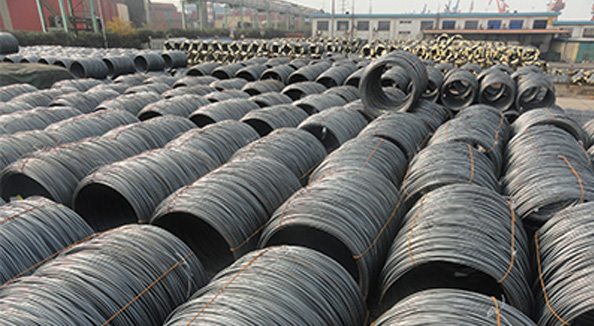
steel wire rod(s), also known as wire material, usually refers to coiled small-diameter round steel. The diameter of the wire rod is within the range of 5 to 19 millimeters (usually 6 to 9 millimeters), and its lower limit is the minimum size of the cross-section of hot-rolled steel. There are many varieties of wire rods. Low-carbon steel wire rods in carbon steel wire rods are commonly known as soft wire, while medium and high-carbon steel wire rods are commonly known as hard wire. Wire rods are mainly used as raw materials for wire drawing, and can also be directly used as building materials and processed into mechanical parts. Stainless steel wire rods are used to manufacture stainless steel wires, stainless steel spring wires, stainless steel top-forged wires and stainless steel wire ropes. With the advancement of production technology, square, hexagonal, fan-shaped and other special-shaped cross-sections of wire rods have emerged. The upper limit of the diameter has been expanded to 38 millimeters. The weight of the tray has increased from the original 40 to 60 kilograms to 3,000 kilograms. Due to the development of the new post-rolling heat treatment process, the iron oxide scale on the surface of the wire rod has been significantly reduced, and its microstructure and properties have also been greatly improved. Wire rods are round steel bars with relatively small diameters. They are supplied in the form of coils. Commonly seen on construction sites are those with diameters of 6,8,10, and 12 millimeters, mostly made of low-carbon steel. They are generally not used as main bars in reinforced concrete structures but are mostly used to make steel bar sleeves. There are also small-diameter ones used for "brick reinforcement" in brick-concrete structures. Before use, the wire rods need to be straightened and cut with a steel bar straightening machine. At the same time, the oxide rust scale is removed in the machine. Through repeated bending and stretching, the strength is improved to a certain extent. For small construction sites without straightening machines, using a winch to straighten the plate is not advisable as it may cause excessive plastic deformation. Instead, a pulley weight should be used at one end to control the pulling force. |